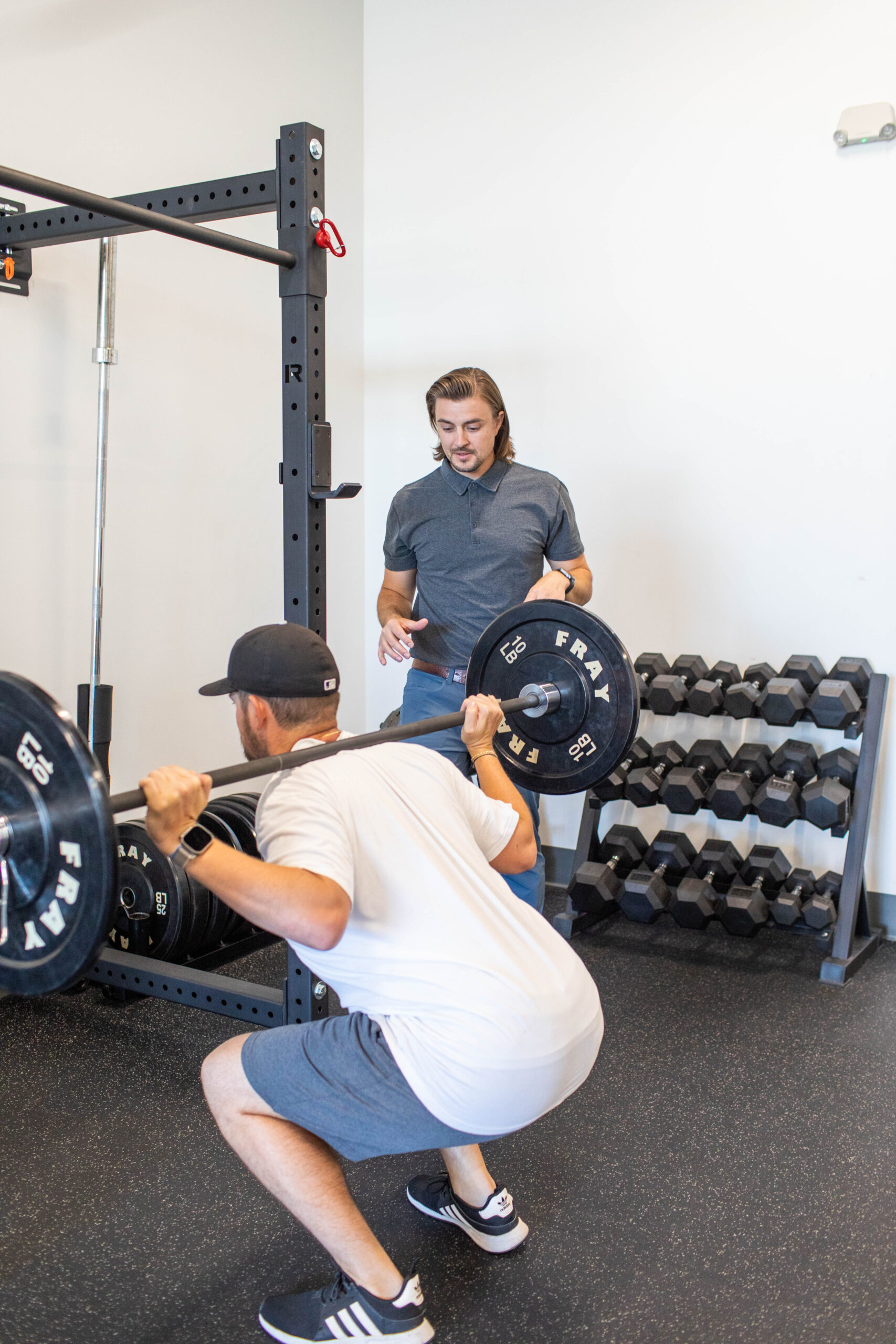
Lifting For Longevity
A physical therapist’s guide to why strength training is non-negotiable for a long, functional life. Plus how to start and perform these movements safely.
If I could bottle one “medicine” that reduces chronic disease risk, prevents falls, and keeps you doing what you love for decades, it would be resistance training. The research is deep and consistent: building and maintaining muscle and strength pays off at every age.
Why is resistance training a longevity multiplier?
1) Resistance training lowers risk for chronic disease and early death.
Large cohort analyses show that adults who do muscle-strengthening activities have a 10–17% lower risk of all-cause mortality and major conditions like cardiovascular disease, diabetes, and some cancers with benefits seen around 30 to 60 minutes per week. Pairing strength work with aerobic activity is even better. ([British Journal of Sports Medicine][1])
2) It improves blood sugar and blood pressure.
Meta-analyses of randomized trials in people with type 2 diabetes find that resistance training meaningfully lowers HbA1c (average blood sugar), and the greater your strength gains, the greater the HbA1c drop. Separate meta-analyses also show that resistance training reduces systolic and diastolic blood pressure. ([PubMed Central][2], [AHA Journals][3])
3) It protects bone and posture.
The LIFTMOR randomized trial demonstrated that well-coached, high-intensity resistance and impact training increased bone mineral density and improved function in postmenopausal women with low bone mass—challenging the myth that “heavy” is unsafe when programmed and supervised properly. ([PubMed][4])
4) It prevents falls.
Updated systematic reviews conclude that exercise programs (including strength and balance components) reduce the rate of falls and the number of people who fall among community-dwelling older adults (high-certainty evidence). Training fast—power, not just slow strength—appears especially helpful for real-world tasks like standing up and catching yourself. ([PubMed][5], [JAMA Network][6])
5) It maintains independence and daily function.
Cochrane reviews show progressive resistance training improves strength and the performance of daily activities (e.g., walking speed, chair stands) in older adults. Newer syntheses echo these functional gains, including with machine-based programs—useful in clinics and community gyms. ([PubMed Central][7])
How much do you need? (Not as much as you think.)
Global and U.S. guidelines recommend muscle-strengthening activities for all major muscle groups at least 2 days per week, alongside weekly aerobic activity. That can be bodyweight, bands, machines, free weights, or a mix—intensity matters more than the tool. ([PubMed Central][8], [CDC][9])
As a PT/wellness coach, here’s how I program for health span while managing risk. Adapt loads and movements to your body and conditions.
The Weekly Structure
* 2–3 days/week of full-body resistance training (30–45 min).
* Move with intent: most working sets at a moderate-to-hard effort (last 2–4 reps feel challenging but controlled).
* Sprinkle in power: on one or two lifts per session, move the concentric phase fast with light-to-moderate loads (e.g., box squat to stand fast, medicine-ball throw). Power training is linked to better function in older adults. ([JAMA Network][6])
Just Starting Out? Here are some basic rules.
Warm up 5–8 minutes (brisk walk + rehearsal sets).
Choose one exercise per pattern.
Do 2–3 sets × 6–12 reps, leaving 1–3 reps in reserve (RIR).
Rest 60–120 sec between sets.
Finish with balance practice (e.g., tandem stance, single-leg stance with support) for 3–5 minutes to target fall risk.
How to Progress as you get stronger!!
- When you hit the top of your rep range with good form, increase load 2–10% next time.
- If joints are cranky, reduce range, switch the implement (e.g., machine or cable), or drop reps to 4–6 with longer rests to lower joint stress while keeping intensity.
- Every 6–8 weeks, re-test a functional marker (e.g., 30-second sit-to-stand, 4-meter walk pace) to confirm training is transferring to life.
Special considerations I use clinically
- Osteoporosis/low bone mass: Favor upright, compound lifts; avoid repeated, loaded end-range spinal flexion; emphasize technique and gradual loading. High-intensity protocols can be safe and effective with supervision. ([PubMed][4])
- Type 2 diabetes or prediabetes: Aim for 2–3×/week; prioritize larger muscle groups and track strength gains—greater strength improvements predict bigger HbA1c reductions. ([PubMed Central][2])
- Hypertension: Expect modest BP reductions; breathe (no prolonged Valsalva), and avoid maximal straining until BP is controlled. ([AHA Journals][3])
Safety first (and always)
- Technique > load. If pain exceeds a 2–3/10 and lingers beyond 24–48 hours, modify range or exercise.
- Balance the week. Separate hard lower-body days by 48+ hours if soreness limits gait or balance.
- Med review. If you take medications that affect blood sugar or blood pressure, monitor closely when you start or progress load; coordinate with your clinician.
The Bottom Line
Muscle is a vital organ of longevity. Training it 2–3 times per week lowers chronic disease risk, protects bone, reduces falls, and preserves independence. The tools are flexible; the habit is non-negotiable. Start light, move well, and progress patiently.
[1]: https://bjsm.bmj.com/content/bjsports/early/2022/01/19/bjsports-2021-105061.full.pdf
[2]: https://pmc.ncbi.nlm.nih.gov/articles/PMC8915309
[3]: https://www.ahajournals.org/doi/10.1161/jaha.112.004473
[4]: https://pubmed.ncbi.nlm.nih.gov/28975661
[5]: https://pubmed.ncbi.nlm.nih.gov/30703272
[6]: https://jamanetwork.com/journals/jamanetworkopen/fullarticle/2792175
[7]: https://pmc.ncbi.nlm.nih.gov/articles/PMC4324332
[8]: https://pmc.ncbi.nlm.nih.gov/articles/PMC7719906
[9]: https://www.cdc.gov/physical-activity-basics/guidelines/adults.html
