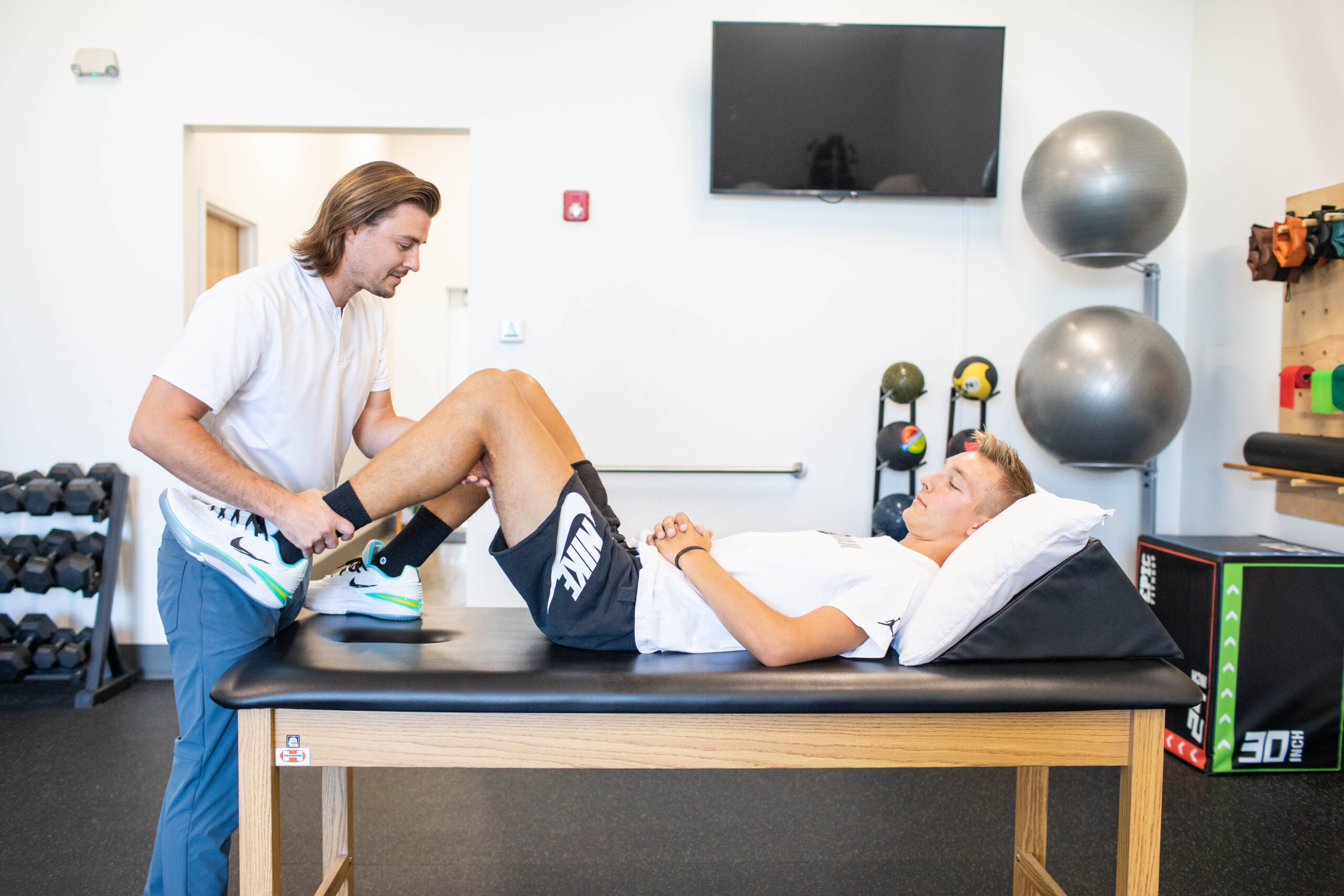
Why Early Physical Therapy Is Critical After ACL Reconstruction
The window immediately following ACL surgery is one of the most important phases of your entire recovery. What you do, and when you do it, has a direct impact on how well you return to sport.
ACL reconstruction is one of the most common orthopedic surgeries performed on athletes. Yet surgery alone does not restore athletic function. The quality and timing of your post-operative physical therapy program is what ultimately determines whether you return to full competitive performance or fall short of it.
The Old “Rest and Wait” Approach Is Outdated
For decades, the standard advice following ACL surgery was to rest, protect the knee, and begin rehabilitation only after the initial inflammation subsided, often weeks after the procedure. Research over the past two decades has fundamentally changed that approach.
Today, evidence-based protocols support initiating physical therapy within the first few days after surgery. Early movement, when guided by a licensed physical therapist, does not compromise the graft. It accelerates recovery.
What Happens When PT Starts Early
1. Muscle Atrophy Begins Immediately
Within 24–48 hours of surgery, the quadriceps, the primary stabilizing muscle group of the knee, begin to atrophy due to swelling, pain inhibition, and immobility. This is not a gradual process. Studies have documented measurable quadriceps strength loss within the first week post-op.
Early physical therapy targets neuromuscular reactivation and quad setting exercises from day one, preserving as much muscle mass and motor control as possible during the acute phase.
2. Swelling Must Be Actively Managed
Post-surgical swelling is inevitable, but unmanaged edema delays range of motion, inhibits muscle activation, and prolongs discomfort. A physical therapist uses targeted techniques, including elevation protocols, manual lymphatic techniques, and early range-of-motion exercises, to manage swelling systematically.
Athletes who begin PT early typically achieve full knee extension sooner, which is a critical milestone for normal gait and downstream joint health.
3. Joint Mobility Windows Are Time-Sensitive
Scar tissue formation begins in the early post-operative period. Without consistent, progressive range-of-motion work, arthrofibrosis, the abnormal buildup of scar tissue within the joint, becomes a real risk. This complication can severely limit knee flexion and extension, sometimes requiring additional surgical intervention.
Early PT preserves mobility before scar tissue can restrict it.
4. The Nervous System Needs Retraining
ACL injuries and surgery disrupt proprioception, the knee’s ability to sense position and movement in space. This neurological component of recovery is often overlooked, but it is essential for safe return to sport. Balance, coordination, and reactive stability all depend on it.
Physical therapists begin proprioceptive retraining early in the rehabilitation process, using progressive balance and neuromuscular control exercises that lay the foundation for sport-specific movement later in recovery.
The Return-to-Sport Timeline Depends on the Foundation You Build Early
ACL rehabilitation is typically structured in phases spanning 9 to 12 months. The milestones you hit in the first 6–8 weeks, full extension, minimal swelling, quad activation, normalized gait, directly influence how quickly and safely you progress through later phases involving strengthening, plyometrics, agility, and ultimately, sport reintegration.
Athletes who delay or inconsistently attend early PT often encounter setbacks in later phases: persistent strength deficits, poor movement mechanics, and increased re-injury risk. The data on ACL re-tear rates, estimated at 15–25% in athletes returning to cutting and pivoting sports, consistently point to inadequate rehabilitation as a contributing factor.
What to Expect in the First Weeks of Post-Op PT
A structured early rehabilitation program typically includes:
Days 1–7: Swelling management, quad sets, heel slides, patellar mobilization, gait training with an assistive device
Weeks 2–4: Progressive weight-bearing, closed-chain strengthening, stationary cycling, full extension work
Weeks 4–8: Single-leg strengthening, balance training, hip and core integration,
Every athlete’s timeline is individualized based on graft type, surgical findings, pre-operative fitness level, and sport demands. Your physical therapist will adjust programming based on objective measures, not just calendar days.
The Bottom Line
ACL reconstruction gives you the structural foundation to return to sport. Physical therapy, when started early, performed consistently, and progressed systematically, is what builds the function on top of it. Delaying rehabilitation is not a conservative choice. It is a costly one.
The athletes who recover fastest and most completely are not necessarily the ones with the best surgeons. They are the ones who commit fully to their rehabilitation from day one.
Planning on getting an ACL reconstruction in the near future? Give us a call, and we can answer any questions you may have and get you scheduled!
